
Do You Really Need an Emergency Jump Starter? Full Buying Guide for Drivers (2026 Research Review)
by SAFEMATE
by SAFEMATE
Yes, You really need an emergency jump starter!
The question "Do I really need an emergency jump starter?" has become increasingly common among car owners, SUV drivers, and truck users. With modern vehicles relying heavily on electronic systems, battery failures are more frequent than ever. This research-based guide explains whether a portable emergency jump starter is necessary, how often batteries fail, and what type of drivers benefit most from owning one.
According to automotive service statistics, car battery failure is one of the top three causes of roadside assistance calls globally. Most batteries fail unexpectedly, often without warning symptoms.

A portable jump starter is not just an accessory—it is a risk management tool. Whether you need one depends on your driving habits, environment, and vehicle type.
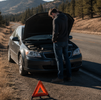
The value of an emergency jump starter becomes obvious in real-world situations.
Car refuses to start at -15°C due to battery voltage drop.
Vehicle parked for 2–3 weeks, battery fully drained.
No roadside assistance available for hours.
Vehicle fails to start before important meeting or delivery.
A modern lithium emergency jump starter contains high-density battery cells, a battery management system (BMS), and intelligent safety controls.
When connected properly, it delivers a high-current burst sufficient to crank a vehicle engine without needing another car.
One of the most searched queries is: "what size jump starter do I need for my car?"
| Vehicle Type | Recommended Current |
|---|---|
| Compact Car | 300–600A |
| Sedan | 600–1000A |
| SUV | 1000–1500A |
| Pickup Truck | 1500–2000A |
| Diesel Vehicle | 2000–3000A+ |
Cold weather significantly reduces chemical reaction efficiency inside car batteries. At -20°C, battery output can drop by 40% or more.
| Feature | Jump Starter | Jumper Cables |
|---|---|---|
| Requires another car | No | Yes |
| Ease of use | Very easy | Moderate |
| Safety | High | Risk of incorrect connection |
| Portability | High | Low |
SAFEMATE designs emergency jump starters based on real-world automotive conditions rather than inflated marketing specifications.

Yes, because response times can be long and unpredictable.
Yes, as long as the battery is not physically damaged.
Typically 3–5 years depending on usage.
Yes, but avoid extreme heat exposure.
Yes, if the unit has sufficient cranking power.
An emergency jump starter is not a luxury product—it is a practical automotive safety tool. For most drivers, especially those in cold climates or long-distance travel conditions, owning one significantly reduces the risk of being stranded.
The key is not buying the most powerful-looking device, but choosing the right balance of real cranking performance, battery quality, and safety design.